
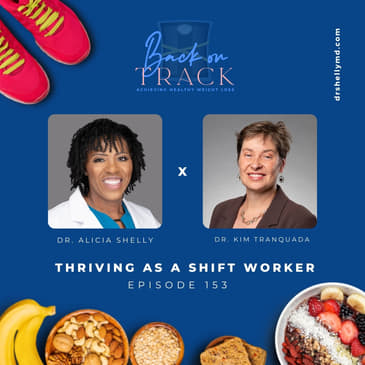
The usual working hours for some people are in the morning shift. After that, they are able to do their gym and healthy practices. But what about night shift workers?
In this episode, Dr. Kim Tranquada, an emergency physician with 25 years of experience, shares her background with us. She focuses on the challenges faced by shift workers, particularly in the fields of emergency medicine and telehealth. Dr. Kim Tranquada provides insights on the health impacts of shift work, the importance of telehealth for underserved populations, and strategies for maintaining health as a shift worker or remote worker. She also discusses special considerations for female shift workers, including pregnancy and breastfeeding, and encourages women to advocate for themselves and seek leadership roles.
Listen now to gain expert insights and practical tips for thriving in demanding work environments!
Episode Highlights:
-
About Dr. Kim Tranquada’s background
-
Health impacts of shift work
-
Her journey into telehealth and international telehealth
-
Health strategies for shift workers
-
Health challenges faced by remote workers
-
Unique challenges faced by female shift workers
Connect with Dr. Kim Tranquada:
-
Website | haew.org
-
Linked In | www.linkedin.com/in/kim-tranquada-md-facep-faaem
-
Facebook | www.facebook.com/kim.tranquada
About Dr. Kim Tranquada
Dr. Kim Tranquada is an Emergency Physician with 25 years of experience. Kim has worked in a variety of clinical settings in the United States, from academic tertiary care medical centers, suburban medical centers, rural critical access hospitals, to tribal healthcare facilities. Dr. Tranquada has led and developed several programs, from emergency ultrasound, a novel medical Spanish and cultural competency residency program, to innovating and implementing tele-emergency care within the largest integrated medical system in the US. Kim is an accomplished leader, a trained and practicing leadership coach and is passionate about building a values-driven organization that embodies global diversity, equity, inclusion, and access. At Healthcare Alliance For An Equitable World, haew.org, our mission is to decrease human suffering and uplift the dignity of all people through equitable healthcare. We envision a world where healthcare is shared without borders, healthcare professionals are a connected global alliance serving a mission with passion and purpose, and all people have access to a life of opportunity.
Resources:
FREE! Discover the 5 Reasons Your Weight-Loss Journey Has Gotten Derailed (And How To Get Back On Track!) 👉 Click
[00:00:00] Welcome back to the Back on Track, Achieving Healthy Weight Loss, where I help you get on track and stay on track with your weight loss journey. I'm your host, Dr. Alicia Shelly. So let's get started. Hi, and welcome to the Back on Track, Achieving Healthy Weight Loss podcast.
[00:00:34] I'm your host, Dr. Alicia Shelly. Now one of the biggest obstacles that I see in my practice is that sometimes I have people who work the night shift or even like it's like the midship where they
[00:00:46] go in at maybe 3 p.m. and they get off at 11. And they find it kind of hard to kind of get the different healthy habits in like finding time to exercise because once you work in a night shift,
[00:00:57] you get home, it's time to sleep. And then when you wake up, you go back to work. And then also what if you're working from home and you're doing remote working, which is
[00:01:06] nice. You don't have to have that driving to the office. But sometimes I found one of my patients who have gained weight because they're not moving as much. And so today we have our expert,
[00:01:18] Dr. Kim Tranquata. She is a board certified in emergency medicine. She's been working in the emergency medicine field for 24 years. Currently, she's doing telehealth, emergency room and international telehealth. So she is the expert. She knows everything about how we can stay
[00:01:36] healthy while doing the night shift or shift work and then also how to stay healthy when you're doing remote work, too. So welcome to the podcast, Dr. T. We're so happy to have you. Thank you, Dr. Shelley. It's awesome to be here. Well, before we get started,
[00:01:53] tell us a little bit more about yourself and how did you find yourself in emergency medicine and in telehealth? Wow, I'm going to blame the show ER. I'm of a certain generation.
[00:02:05] And when I was in medical school, you know, you find your specialty because I think you find the place and the people that feel most comfortable to you. And, you know, when I was only a second year medical student, they had rotations in the emergency department at my
[00:02:21] medical school. SUNY Downstate, SUNY Downstate. Yes, yes, yes. And I rotated in the emergency department and those were special times. The things I saw and did are quite outside of the range of what current medical students and residents do. But it was amazing because
[00:02:40] we could see patients, we could put IVs in and just watching these doctors see patients, whatever walked in the door. You didn't have to know their history. Sometimes they couldn't even speak to you. What you could do for a patient with so little information and change
[00:02:58] their life was just so inspiring. And that was always the image of the kind of doctor I wanted to be. I wanted to be able to take care of anybody no matter what age they were,
[00:03:09] what they're coming in for, whether it's mental health, whether it's a broken bone or a stroke. I wanted to do it all. And so I got the EM bug. But with that comes
[00:03:20] the glamour of shift work for the rest of your life. Well, for those who aren't aware, can you share with them how that shift work works in emergency medicine? So I just want
[00:03:32] to say, look, we're coming out of three years of COVID. So not only have our emergency workers been working shift work their whole lives, but they have done it at quite an intensity for several years. And I just want to say how much I appreciate my colleagues
[00:03:48] for the incredible work they do. But shift work means, look, you do something that is so essential that it has to be open 24 hours a day, seven days a week. So depending on how
[00:03:58] many hours you work and for early part of my career, I worked 12 hour shifts. Currently, I can work 12 hour shifts sometimes. Sometimes it's eight or 10. But somebody works in the morning. So you might work 7am to 7pm. Somebody works the mid shift. So you might work
[00:04:14] three to midnight or three to one, depending on how the length of your shift is. And somebody works overnight. So somebody comes in at seven o'clock or still seven in the morning, or some variation of those shifts. And that has to go on every day, 365 days a year,
[00:04:30] holidays, all of it. Somebody has to be there all the time. So please, please, please always be gracious for the folks that are doing that so that we have some place to go when
[00:04:42] we have the worst day of our lives. And what an incredible thing to be able to be there when somebody's having the worst day of their life. Now, how did you get into telehealth, emergency care and into international tech? Well, great question, Dr. Shelley. So
[00:05:00] I have been working in emergency medicine for a long time now and, you know, kind of work my way through the ranks and was in leadership, assistant director of our department. When the
[00:05:12] health system that I work in was considering what they were calling tele-urgent care at the time. And they were just having early discussions and I got the opportunity to be on that discussion committee and planning committee. And as it developed, it was developing that we would
[00:05:26] actually have emergency doctors providing on demand care for people calling in from home. And I thought, wow, this is special. This is great. And then it came time for somebody to actually take these ideas in the meeting and implement it. And that's the kind of person I am.
[00:05:47] So I raised my hand and I said, I'm willing to do it if you'd have me. And they said, yes. And so I implemented the first regional program in that system across eight health centers
[00:05:59] three states. And then after I did that, I said, I want to know if I could do this again. And so in the same health system, it's a national health care system. I went and did
[00:06:07] it in another five states and eight health care centers. And after doing that, I said, this is a powerful intervention for people that are rural, people that have mobility issues, people that can't access health care easily. We need to scale this in a way that I can't see
[00:06:29] us doing within the systems that exist. And that's where I decided to form the health care alliance for an equitable world and really bring health care by telehealth to the 84% of the population of the world that lives in low and low middle income countries and don't have
[00:06:49] the infrastructure and easy access to health care. Oh, amazing. So not just in the West, you're going abroad to people that don't have care. Wow, that's amazing. Well, you've been in emergency medicine, you're doing telehealth now. What were some obstacles or
[00:07:04] challenges that you had with maintaining your health with these different schedules? So I want to say to everybody that's doing shift work, please be aware of the impacts on your health. In the end, we can't give amazing care to patients if we can't take care of ourselves
[00:07:22] first. So shift work causes sleep disturbances. Shift work causes fertility issues. Shift work causes through cortisol effects, causes diabetes, heart disease, strokes, it's carcinogenic. It decreases your lifespan. And this is something of a discussion in communities where people do
[00:07:45] have to do shift work as part of their work. Pilots have to do this, certainly hospital folks like laborists and hospitalists and ED folks. And so in different stages of your life, it's easier
[00:07:59] to do shift work than later stages of your life. But then again, it's decreasing your lifespan. So who gets to carry the burden? So how you share that burden is super important. But there
[00:08:10] are things you should do for yourself personally, just keep that awareness that you have to do this, but you have to be in control of protecting your health. So one of the biggest things is
[00:08:22] the diets that people eat on shift work. Our hospitals don't provide us an open cafeteria at night. People tend to eat vending machine food or takeout, leading to a very unhealthy diet.
[00:08:40] Very early in my career, they call me a bag lady because I carry these bags to work. One is my work bag and one is my lunch bag. It's literally a big bag. And then I carry water because I
[00:08:52] never drink anything unless it's water, tea and only coffee once. And I can explain coffee once even for night shifts in a bit if you'd like. And I carry my own food. I pack my own food
[00:09:07] before I go on every day. And that lets me pick the kind of food that I need to eat and fuel my body in a way that's going to be healthy for me and help me have the longevity
[00:09:19] I need to take care of my patients. So drink lots of water. And even on night shift, one of the biggest mistakes people make is they start their day with a giant coffee container. They start their night that way. They go through the whole night drinking caffeinated
[00:09:34] beverages. They end with caffeine and then they go home and they can't sleep. Even if they fall asleep, they're up urinating because coffee has a diuretic effect and they're dehydrated, all leading to poor sleep. So I decided to study the literature for
[00:09:50] the people that control our flights in the air. They work shift work all the time and there have been lots of studies. So when I was working night shifts, I did this for three years.
[00:09:59] I decided to study that literature and found that coffee has a limited effect and you can become used to the effect if you overuse coffee. So coffee will kick in at about 20
[00:10:11] minutes and it's gone in about four hours. So when did I need coffee? I needed coffee to get home safely at the end of my night shift. So I would come into work, drink water the whole night,
[00:10:22] no matter how tired I got, and only drink that coffee 20 minutes before the end of my shift, get myself home and then sleep during the day. LESLIE KENDRICK Did it make it difficult for you to fall asleep because it was still within that four hours? Okay.
[00:10:36] No. Unfortunately, 24 years of sleep that makes you very easy to fall asleep because sleep that accumulates over time. So there was lots of rules, but yes, that's a good question. And if you do find that it gives you trouble falling asleep, what some people do is that
[00:10:54] they make that their exercise time when they go home. So if they got that boost from the coffee and they're home safe, and really this is a big deal getting home safe, we lose a lot
[00:11:03] of healthcare workers to accidents on the way home from night shift. So get home safe, and if you are all jazzed up, that's a great time to do exercise. LESLIE KENDRICK Okay. Well now let's talk about remote work where you're working from
[00:11:17] home. Were there any challenges that you faced when you were working from home now doing your international telehealth and televersions? LESLIE KENDRICK Yeah. So this is going to be a big epidemic coming up. Look, telework is
[00:11:29] is taking off in not just in medicine, but in a lot of industries. And it's wonderful. Look, it makes lots of jobs accessible to people that it wasn't accessible to before. You don't have
[00:11:41] to give up your family and move all the way around the country to get to do a great job. You can do it from home. It's more accessible to more people, and that's better for all of us,
[00:11:50] but it does have some downsides. And because everybody thinks this is somehow a gift to the employee that they get to telework, it's become an unhealthy environment for the person. The person on telework doesn't have the same personhood as a person in person. So in person
[00:12:10] you can go in, you can talk to your colleague when you get in the morning, gee, you could take a bathroom break, you walk around. Those things don't happen on telehealth. On telehealth, you are monitored every minute. Everybody knows where you are every second of the day,
[00:12:24] and it's almost like you're trapped at your desk. And that is a problem that we cannot let continue. So people have elevations in blood pressure, elevations in blood glucose, of course, weight issues, problems with the spine, the neck, the back, the shoulders, the joint pains.
[00:12:44] So they are doing some early studies now, and even five minutes of exercise every 30 minutes can lower your blood pressure and lower your blood glucose. But you have to do it every 30 minutes.
[00:12:57] So you have to get up, and you have to move, you have to move your legs. You can be in your same space, you'll have to go very far. But five minutes every 30 minutes can make a big
[00:13:08] difference in your health. But look, we have to develop this if we're going to have more people doing telehealth. Walking treadmills, standing desks are helpful. So if you can get a standing desk, and again, these things are accessible to some people and not because they
[00:13:24] cost money. But the price point on a lot of these things is coming down. So if you can get a walking treadmill, a standing desk, even if you stand and do calf raises, you can do
[00:13:35] isometric exercises in place. You have to be very cognizant of what your shoulders are doing, what your neck is doing, taking moments to even just disconnect from the screen and being
[00:13:46] mindful. I have a little yoga set up back here, I got my water fountain. Just if you can take five to 10 minutes to just turn everything off, listen to some music, just listen to your mind
[00:13:57] and be quiet. All of those things are going to be helpful in the longevity of people that are working by telehealth. The productivity of telehealth workers is as much as 30% more than people working from home. And we cannot take advantage of that by making them work
[00:14:13] even more. Absolutely, absolutely. Well, so you've given us some great strategies for those who are doing shift work, it's important to bring your own meals, don't eat from the cafeteria or the vending machine, drink water the majority of the time and then before you go home, you can
[00:14:31] have a little coffee just to get you. And if you're still awake, you can go exercise and then go home and go to sleep. The other question and for those who have remote work,
[00:14:41] make sure that you take a break, five minute break every 30 minutes. Make sure you're moving, using a standing desk or you can even put like blocks or boxes to kind of make sure that it's
[00:14:52] eye level so that you're having proper posture and having that time to step away from it. Because I know patients where they get to work in and before you know it's the end of the day,
[00:15:02] they forgot to eat, they forgot to do anything. So it's important to kind of have those breaks. And even if you have to put an alarm on your phone to remind yourself to take a break,
[00:15:10] it's okay. It's okay. Now going back to that shift work, how do you feel about like people taking melatonin to go to sleep? Or what are your thoughts on that? I've never used any supplements to sleep myself. Certainly melatonin would be preferable to people taking things
[00:15:29] like benzodiazepines that are going to over the long run disrupt your sleep cycle and make you not be able to go to bed. And it's definitely preferable to alcohol. This is an issue, something people get a little wrong because alcohol makes you sleepy. And so sometimes
[00:15:45] people drink alcohol thinking, hey, that'll get me to sleep. So alcohol does make people sleepy. It may get you to fall asleep, but it actually alters your sleep cycle so that you
[00:15:56] don't get into deep sleep. And so you will wake up tired and you will be chronically tired. And then of course that could lead to problem drinking over time. Yeah, and sleep deck. Like you're saying. Well, any other strategies that you have for the audience who may be
[00:16:11] struggling with this whole night shift or remote work? Any other strategies or advice that you have? I want to talk to our lady shift workers because there are a lot of our shift workers.
[00:16:20] And shift your life that you're trying to have your life go on. Look, I started this career and had three babies while working shift work. I also had three miscarriages before all three of those babies. And was that related to my work? Quite likely, right? Miscarriages are
[00:16:38] more common for shift workers and certainly for shift workers that do constant walking and heavy labor like an emergency doc. My premature birth, low birth weight is very common. And then of course, difficulties becoming pregnant. So if you are a lady shift worker
[00:16:54] and you're trying to have a family, please be aware of those issues and know that you can advocate for yourself to change that for a period of time. Do not be guilted into,
[00:17:07] I have to do this. The other time our lady shift workers need support is after they've had that baby. I can't tell you how many times I got to work with a much too small baby
[00:17:17] and breastfeeding. I did my ICU rotation as an intern while still breast pumping for my newborn infant. Challenging, but I did it anyway. And I've done that three times in my career and I do it because I'm tired of generation after generation women having to do
[00:17:37] these ridiculous things and figure it out. Did I solve the problem in my one little lifetime? I sure did not, but- You're making strides. Yeah, but I at least opened the door for another woman to say, I can do that and I can advocate
[00:17:54] for myself to do that. And hopefully we can all do more to support each other at a very important time, right? It's important for the year in colleagues' health. It's important for the baby's health. I mean, aren't we a society that cares so very deeply about women's health?
[00:18:09] I've always found it ironic that medical care, the American Academy of Pediatrics said you should breastfeed your child till a year old, but there isn't a breastfeeding room anywhere in the hospital. Who do they suppose is carrying out the medical care? So a lot of medical care is
[00:18:27] carried out by women that might want to have children. Not all women have children, but a lot of health care is carried out by women. The majority of nurses are women and half the doctors
[00:18:37] now are women. So we definitely need to elevate those issues. Oh, excellent. Excellent. We need to advocate for each other, most importantly, especially. And I think when you mention what people can do if they're pregnant and asking for accommodations, they can go to their
[00:18:53] human resources, they can fill out forms so that they can be able to be accommodated during and know that there are some, there are legal laws in place to help protect you.
[00:19:05] If people do try to make you feel bad, you have rights to. Yes, anybody can appeal to the EEO directly. You don't even have to go to your employer. There's an EEO hotline. So unfortunately
[00:19:17] that it shouldn't be that hard, but it is. And please know that those things are there to protect women. So you're not trying to get anybody in trouble, but you're just trying to protect yourself. So please use those things if you need to. Absolutely.
[00:19:31] And if you're a woman, just get into leadership so you can be the one making the decisions and we don't have to fight about this all the time. Yes, be the champion
[00:19:39] you seek to make. So come be that leader. Well, thank you so very much Dr. T for coming on and sharing with us strategies on how we can take back our health, get back on track with our
[00:19:51] health, especially if we're doing shift work or if we're doing remote work as well. Last but not least, how does somebody work with you if they're interested or at least want to hear more about your telehealth business? The Healthcare Alliance. I would love
[00:20:07] to invite anyone in your audience that's interested to please reach out. You can reach me directly at Dr. T, that's D-R-T-T-H-A-E-W, stands for the Healthcare Alliance for an Able World dot org. We also have a website, H-A-E-W dot org,
[00:20:26] that you can find out more and right on that website, you can click to volunteer and we will get your information and be in contact with you. You can click to donate if you're not in a position
[00:20:38] to volunteer, but you'd like to support our work and you can click to be on our subscriber list to get updates to see what we're doing. Excellent, excellent. Well, thank you again for
[00:20:48] joining us and thank you all for joining us today on the Back on Track Achieving Healthy Weight Loss podcast. If you liked this episode, please, please share it with others,
[00:20:59] like it and subscribe and don't forget to leave a five star review. Alright, we'll see you all next time.