
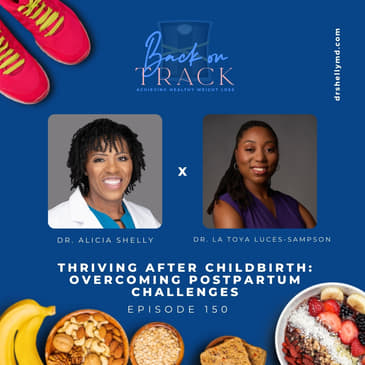
Pregnancy is not an easy journey, and it can cause a drastic change in a woman's life and health.
In this episode, Dr. La Toya Luces-Sampson, a wife, mother, board-certified Obstetrician and Gynecologist, and Coach, shares with us her background and profession. She discusses postpartum challenges and solutions, emphasizing mental health, physical healing, and self-care for new mothers. Dr. Toya also highlights the struggles faced by moms after childbirth, including breastfeeding pressure, body image concerns, lack of support, and the importance of planning for postpartum recovery.
Click play now to empower yourself with the knowledge you need for a smoother postpartum journey!
Episode Highlights:
-
About Dr. La Toya Luces-Sampson
-
Challenges faced by moms postpartum
-
Strategies for postpartum recovery and exercise
-
Preparation for postpartum and delivery
-
Final advice on self-acceptance and determination postpartum is shared
Connect with Dr. La Toya Luces-Sampson:
-
Website | drtoyaobgyn.com
-
Facebook | www.facebook.com/people/Dr-Toya-OBGYN
-
Instagram | @drtoyaobgyn
-
Linked In | www.linkedin.com/in/la-toya-luces-sampson-md
-
Tiktok | @drtoyaobgyn
-
Youtube| @DrToyaOBGYN
About Dr. La Toya Luces-Sampson
Dr. La Toya Luces-Sampson (Dr. Toya on social media) is a wife, mother, board-certified Obstetrician and Gynecologist, and Coach. She shows Physician Moms who are postpartum and beyond how to go from feeling anxiety and resentment to feeling confidence and joy.
Resources:
FREE! Discover the 5 Reasons Your Weight-Loss Journey Has Gotten Derailed (And How To Get Back On Track!) 👉 Click
[00:00:00] Welcome back to the Back on Track, Achieving Healthy Weight Loss, where I help you get
[00:00:05] on track and stay on track with your weight loss journey. I'm your host, Dr. Alicia Shelly.
[00:00:11] So let's get started. Hello, welcome to the Back on Track,
[00:00:31] Achieving Healthy Weight Loss podcast. I'm your host, Dr. Alicia Shelly. Now I've had several
[00:00:37] clients, several family members, several friends tell me how Prypdid C had derailed their health.
[00:00:43] They were doing great before they got pregnant and then after pregnancy, the stress of being a new
[00:00:48] mom, that all the distress and different obligations really put a toll on them. And it was hard for
[00:00:54] them to kind of get back to their pre-pregnancy health. And so today I have expert Dr. Latoya
[00:01:02] Lucis Sampson. You can see her as Dr. Toya on social media. She is a wife, a mother,
[00:01:09] a board certified obstetrician and gynecologist and coach. She shows physician moms who are
[00:01:15] postpartum and beyond how to go from feeling anxiety and resentment to feeling confidence
[00:01:21] and joy after having a baby. So welcome to the podcast Dr. Toya. So good to have you.
[00:01:27] So much. I'm so glad to be here. Well, before we get started,
[00:01:31] we want to learn a little bit more about you. So tell us a little bit more about
[00:01:35] your staff and how did you get into this space?
[00:01:38] Yeah. So I am Latoya Lucis Sampson. I am originally from Trinidad and Tobago.
[00:01:44] I went to Howard University, the best university in the entire country, just in case you're
[00:01:50] wondering. And I trained in Philadelphia and have been living and practicing in California.
[00:01:56] And I've had a tumultuous journey to say the least. But the short version is I was
[00:02:03] practicing as an OB, got burnt out and then went to do locums. And if my path out of burnout was
[00:02:12] through entrepreneurship, through the entrepreneurship, I then discovered speaking, you know,
[00:02:19] fell back in love with educating patients, which led me to educate people online. And while
[00:02:25] I was doing all of that, I had a second baby. And it was my second postpartum experience
[00:02:31] that was very rough on me, but I thought that it would be fine because it was the second
[00:02:35] baby. Right? And I was in full control. I was an entrepreneur, but it was not that way at all.
[00:02:41] And I really just didn't take time to take care of myself and heal and rest. I didn't have
[00:02:49] as much support as I would have liked. So it was a very difficult time. So as I worked through
[00:02:54] that and came through it, I really wanted to help other physician moms just really avoid what
[00:03:00] I went through and just educate people, build that community that we are so lacking in this
[00:03:07] day and age and just help people feel less alone and more seen. Awesome. That is wonderful.
[00:03:14] I'm so glad that you're here today to kind of help our audience through this. There's a baby
[00:03:18] of moms who had maybe multiple pregnancies, you know, it was, it just was difficult. So
[00:03:24] what are some like challenges that moms face after having their baby? Oh, there's so much.
[00:03:30] There's so many. So the breastfeeding can be a big one. And I know that the data says that
[00:03:40] breastfeeding is protective against postpartum depression, but I find for many high achieving
[00:03:45] women, especially physician moms, it can be a sort of, it can be like the opposite because
[00:03:50] we put so much pressure on ourselves. And if there are any issues, supply issues, you know,
[00:03:57] any kind of pain, anything where you cannot do it or you can't do it the way that you thought
[00:04:02] you could. It can cause a lot of issues. I have a really special interest in mental health
[00:04:07] in this time. It's one of the biggest things that I feel like people don't consider that
[00:04:12] could really affect your mental health. It's what affected mine and I had to stop early,
[00:04:18] but it also plays into your body and your weight and how you want to look because
[00:04:24] breastfeeding makes you ravenous, right? It makes you really, really hungry. And when you add on
[00:04:30] fatigue and anxiety and all those things, you feel like you deserve food. And of course,
[00:04:36] it's not healthy food, at least it's possible for me. It was all of the things that give you
[00:04:41] good milk is like oatmeal cookies and chocolate and all those things. So it can be
[00:04:47] really tough to balance this desire to do the best thing for your baby, to feed the baby
[00:04:53] from your body and then also look a certain way and then add on the guilt of wanting to
[00:04:58] look a certain way, you know, even trying to sacrifice your milk supply and maybe whatever
[00:05:03] that may mean for you and your family. So it can be a very complicated time.
[00:05:09] Thank you. Yeah. So definitely I could see that where if you're not able to breastfeed,
[00:05:14] initially that can be very stressful for you. And then on top of that,
[00:05:18] you know, trying to get back to your healthy body weight is even harder.
[00:05:22] It's actually you're so hungry. Any other challenges that moms face, especially maybe
[00:05:28] not only just the breastfeeding, the mental health aspect, anything else that moms are facing
[00:05:34] even after or any challenges that you faced after having?
[00:05:37] Yeah. Yeah. So there's the physical aspect. Your body went through this very big event
[00:05:44] that you may have actual physical healing to do if you had any tears, if you had a C-section.
[00:05:51] But even if everything went perfectly, like my delivery was uncomplicated,
[00:05:56] but I still had a lot of pain postpartum just from the changes that my body went through
[00:06:03] and the healing process that just needed time. There was nothing actually wrong.
[00:06:08] Just that all that stretching and the weight from my very big daughter
[00:06:12] caused like a lot of residual pain. And then if you have leaking because you were pregnant
[00:06:20] and that's a normal thing that happens and eventually it gets better. You know,
[00:06:24] if you have dryness down there, I don't know how much you want me to say on your podcast,
[00:06:29] but you know, there are lots of physical changes that can happen as well. And especially
[00:06:34] if you are trying to become more active, it can really inhibit that. And it's not just like
[00:06:39] six weeks comes and everything is fine. That joint pain and just muscle weakness and all of
[00:06:45] those things can last quite a long time. So it can be difficult in that respect as well.
[00:06:52] And then if you don't have support, right? If you have people around you,
[00:06:56] but they are not helpful, it can be very isolating. And that's why, you know,
[00:07:01] I say I help moms go from resentful and anxiety to confidence and joy because it
[00:07:07] is a very common feeling when you feel like you don't have the support that you need in such
[00:07:13] a tumultuous time. So they, you know, I could go on and on about all of the challenges,
[00:07:19] but if anybody's listening, it's not all bad. It's great. How bad?
[00:07:25] Well, let's see your thing about what strategy that we can use to overcome because we tried
[00:07:30] to have the biggest challenge is the body changing, you know, a lot different after
[00:07:36] your pregnancy than it was before. Yeah, that's mental health aspect, the breastfeeding that
[00:07:42] can be difficult. And you know, the one thing we did talk about was that mom guilt,
[00:07:46] you know, and guilt that oh, I need to be with my baby 24 seven, me going for a walk.
[00:07:51] It's just not, not okay. You know, to overcome those particular.
[00:07:57] Yeah, well, I'm a really big advocate for alone time. It is a very postpartum, especially
[00:08:03] immediately postpartum is a very high touch time that most people are literally feeding
[00:08:10] the child from their bodies like the baby is on you all the time and that can really have an
[00:08:15] effect on you physically and mentally because if you are carrying the baby all the time,
[00:08:22] if you are not getting enough sleep, then you're going to be negatively affected.
[00:08:27] And if you don't have a minute just to not be wanted, not be needed, not be questioned,
[00:08:33] it can really affect your mental health as well. So I really advocate for moms at every stage.
[00:08:40] Once you're done recovering and you can walk around and do those things,
[00:08:44] just to have some alone time, even if it's you resting, somebody else has the baby,
[00:08:50] sign on the door saying, don't disturb just to get a little bit of time for yourself.
[00:08:56] Like you said, going for walks is a really nice way to get you active that doesn't involve you,
[00:09:02] you know, like going to the gym or anything like that. And it can be just getting that
[00:09:07] time to just hear yourself think and just to be, which is very often something that is hard
[00:09:13] to come by when you are postpartum and you can tell people don't be guilty. Like you just
[00:09:19] can't. You're going to be guilty, but you don't have a reason to like putting one of my biggest
[00:09:27] platforms or soap boxes is that moms need to put themselves first. They have to make sure
[00:09:32] that they're healed, make sure that they are healthy because you are your own person, you
[00:09:39] matter, you are worthy of the care and love and support that it takes for you to be all
[00:09:44] those things. And it is also beneficial for your family as well. If you are healthy,
[00:09:49] you cannot be feeding your child if you're not physically healthy or mentally healthy. Right?
[00:09:55] So you really have to put yourself first. And once you believe that, once you know it,
[00:10:00] you really have a lot less guilt. I wouldn't say none because I still have, it still comes,
[00:10:05] but you know, it comes with the territory, but it will be a lot less.
[00:10:09] I like that. So make sure that you put yourself first, finding that mom time,
[00:10:13] that adult time where you're able to kind of come back to yourself per se. Any strategies?
[00:10:19] And you said if your body has stretched in the face of that leaking, it's just allowing
[00:10:24] it time to heal. So it should be the time most of the time. Should you get it during this
[00:10:30] time or should you move, you know, I guess, did you start exercising after?
[00:10:34] Yeah. So it really depends on the person, right? The recommendations are not just for everybody.
[00:10:40] If you had a delivery vaginally or C-section, those things change. So of course you follow
[00:10:45] up with your doctor and follow their recommendations, but you can start being active as soon as you
[00:10:52] can. It is beneficial to you to, I mean, you say active, it literally can mean getting up
[00:10:57] and walking around the room, getting up and walking outside. Right? So when we think about
[00:11:03] activity and exercise postpartum, it looks a little bit different and that's okay. It doesn't
[00:11:08] have to be something super strenuous. And then you work yourself back up to wherever you were
[00:11:14] before. Or even if you want to, you know, take it up a notch and introduce some new exercises
[00:11:20] and things like that. Usually it's not going to be before six weeks if you've had a vaginal
[00:11:25] birth or eight if you had a C-section. Like I said, is really individualized. And the thing
[00:11:31] I tell most people is you have to remember no matter how you give birth, your core is very
[00:11:38] weakened when you have a pregnancy, when you have a baby in there. That's just what happens.
[00:11:43] That's why you have the leaking and all of those things. So just focusing on strengthening
[00:11:48] that core first, which doesn't mean crunches. It can be as simple as starting with like
[00:11:53] belly breathing, you know, just really doing some deep core work and realizing that your core
[00:11:59] is the entire thing. It goes from the ribs down to your pelvic floor, wraps around your belly
[00:12:05] to your back. Like that entire thing has to strengthen up before you can start doing
[00:12:09] anything really strenuous because you can risk hurting yourself. You can risk having a
[00:12:15] diastasis worsen if you have one. So it is really something that you want to do carefully
[00:12:21] and just taking your time and going slowly to get yourself back to where you want to be.
[00:12:27] I like this. So starting where you are, but just kind of moving, you know, to taking baby steps,
[00:12:32] they kind of get you where you want to be. That's a really good thing people can use.
[00:12:38] Now is there anything that people can do to help prepare themselves for delivery,
[00:12:43] like prior to deliveries or something they should be doing during pregnancy or even,
[00:12:46] you know, prenatal care? Yeah. So yeah, I love planning focus. Because very few people
[00:12:53] do. Everybody plans for the baby, but it is really important to plan for your postpartum.
[00:12:59] And just being active during the pregnancy can actually help you feel better. I had a lot of
[00:13:05] pain during my pregnancy because she was so big. Like I had to stop working, but I actually felt
[00:13:12] worse if I laid down in bed for too long. Like when I got up, it was like even more
[00:13:18] painful. So it was like this very interesting balance of some kind of movement and still being
[00:13:25] able to rest and take the time that you need. But I've found that being active in some way
[00:13:32] is better than being in bed all the time. Because in general, bed rest, first of all,
[00:13:37] it doesn't really help you medically, but it can actually harm you. So some kind of activity
[00:13:43] can just help you not be deconditioned and make it a much more seamless transition to when you're
[00:13:51] postpartum. And just really preparing and thinking about how am I going to be postpartum? What do
[00:13:57] I need? Let me talk to my family and my support system and tell them, you know, these
[00:14:02] are the things that I need. These are the concerns that I have. Just making sure that the
[00:14:07] support is there for you so that you're not in it. And like, oh my God, I don't know. I
[00:14:12] don't know what's going on. I don't know what I need. I don't know what to do. So planning
[00:14:16] is really important. Well, I love thank you so much for your time and strategies that you've
[00:14:22] given us today. Any last minute advice to have the moms, you know, trying to get back after
[00:14:28] having, you know, get their body back, get their health back after having their children.
[00:14:32] Edina, postpartum appeared. Yes. Give yourself grace. Give yourself time. I'm not one of
[00:14:38] those people who are like, oh, you just had a baby. You should love your body how it is.
[00:14:42] I don't believe that at all. You can work to whatever kind of body you want to.
[00:14:47] You can want to get back. You know, having a snapback is fine. Whatever you want to do.
[00:14:51] But while you're doing that, giving yourself all the grace in the world because you just had
[00:14:56] a baby, this major event that happened in your life and it may take time and it may be
[00:15:03] frustrating. It may be just really upsetting to not be able to feel how you want to feel
[00:15:10] and look how you want to look, but with determination and with help, you can get there
[00:15:15] and don't let anybody make you feel bad for wanting to have a snapback. Nothing's wrong with
[00:15:19] that. Yes. Nothing's wrong with that. Things wrong with that. Well, before we go, would you
[00:15:24] mind just sharing how people can work with you? Where can they find you? Yes. Yeah. So
[00:15:30] I can be found on my website. It's drtoyacoaching.com. So it's drtoyacoaching.com.
[00:15:38] And you can find everything there about my coaching. Like I said, I do one-on-one
[00:15:43] really individualized coaching for physician moms and really professional working moms in general
[00:15:49] who are in this early phase and just need a little bit of guidance, a little bit of
[00:15:53] community, a little bit of help, just figuring things out during this stage. I also can be
[00:15:59] found on social media at drtoyacoaching.com everywhere, Instagram, Facebook. Well,
[00:16:05] Facebook is just my name. I'm TikTok on YouTube and I have a podcast also called
[00:16:10] Stethoscopes and Strollers where you can get all of my support, all of my messaging about
[00:16:18] what you deserve, which is everything. You deserve it all. And if you listen to
[00:16:22] Stethoscopes and Strollers, it will help you feel a little more seen and a lot less
[00:16:28] alone. Yay. Well, thank you so much for your time. Thank you. And thank you all for joining
[00:16:33] us on the Back on Track Achieving Healthy Weight Loss Podcast. If you all like this episode,
[00:16:38] please share with others, like it and subscribe. And don't forget to leave a five-star review
[00:16:43] and we will see you all next time.